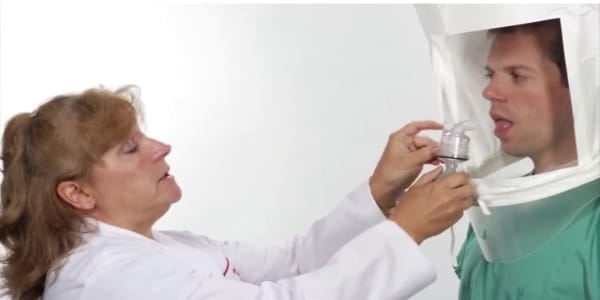
Our N95 mask fit testing fulfils the requirements of OSHA 29 CFR 1910.134 and CSA standard Z94.4. Training covers donning and doffing, facial seal, seal checks, use, risks, and precautions. The certificate is valid for two years and records the date, make, model, and testing type. Book with your own mask or use one of ours.
About the N95 respirator
The “N” means “not resistant to oil,” and the “95” refers to the filter efficiency.
Preparing for the test
- Refrain from gum chewing, smoking, eating, or drinking (other than water) 20–30 minutes before testing, as this may interfere with the test.
- You must be clean-shaven where the respirator meets the face — no facial hair around the seal of the mask.
Medical screening
A respirator assessment is necessary to identify any participant who may not be able to wear an N95 respirator for health reasons. Participants complete a Medical Screening Assessment form before testing.
How the training proceeds
- Participants fill out the Medical Screening Assessment form for the N95 respirator.
- The instructor explains the procedure for donning and doffing masks.
- The instructor explains the testing procedure.
- Participants practise.
- Participants who pass the test receive a certificate.
What if I can’t be fit tested?
If you cannot attain a proper seal with any available respirator, you will be assessed by Occupational Health and Safety Services to find a protective mask that fits.
When should fit testing be repeated?
- Every two years
- When a satisfactory fit test has not been achieved
- After a change in physical condition such as obvious weight gain or loss, or a change in facial features
Getting a good seal
- Use only the respirator fitted to you.
- Be fit tested to the manufacturer’s recommendations.
- Visually inspect the respirator for defects before use.
- A clean shave provides the best protection.
- Perform two seal checks when donning the respirator — a positive-pressure (exhalation) check and a negative-pressure (inhalation) check.
Positive-pressure fit check. Place the palms of your hands over the front and exhale gently. A proper fit is obtained if the facepiece bulges slightly and no air leaks are detected between your face and the facepiece. If leakage is detected, reposition the respirator and readjust the strap tension, then repeat. Never enter a contaminated area if you cannot achieve a seal.
Negative-pressure fit check. Without disturbing the respirator’s position, cover the front completely with both hands and inhale sharply. Negative pressure should be felt inside the respirator. If you feel any leakage, readjust the position or strap tension and retest.
Removing the respirator (doffing)
There are no published data on how long a respirator remains effective. Health Canada recommends changing the mask if it becomes wet, interferes with breathing, or comes into contact with respiratory droplets. Do not use damaged or visibly soiled masks — disposable respirators should be discarded after each use.